
Blue isn’t just a color; it’s an entire mood, a vibe, and sometimes even a state of mind. From the serene depths of navy to the playful whispers of sky blue, shades of blue can transform any space or design project into a masterpiece. Whether you’re painting a room, designing a website, or just trying to pick the perfect outfit, understanding the nuances of blue can make all the difference.
Overview of Shades of Blue
Shades of blue vary widely, offering a spectrum from soft pastels to rich, intense tones. Light blue reflects tranquility and calmness, often used in spaces aimed at relaxation. Medium shades like cerulean deliver a sense of openness, perfect for both interiors and digital environments. Deep navy conveys professionalism and stability, making it a popular choice in corporate settings.
Each shade serves a unique purpose. Baby blue evokes freshness and youthfulness, suitable for nurseries and playful design. Steel blue introduces a modern edge, ideal for minimalist aesthetics. Turquoise combines blue with green, presenting a refreshing vibe often associated with coastal designs.
The versatility of blue extends into fashion. Denim, a staple wardrobe item, showcases the hue’s adaptability across styles. Teal, a blue-green blend, has gained popularity in accessories and home decor. Royal blue stands out in formal wear, highlighting elegance and sophistication.
From psychological implications to aesthetic choices, understanding shades of blue enhances decision-making. The right shade can influence moods and perceptions in any chosen setting. Using a shade chart can assist in visualizing how colors interact with light and other colors, ensuring the desired look is achieved.
Common Shades of Blue
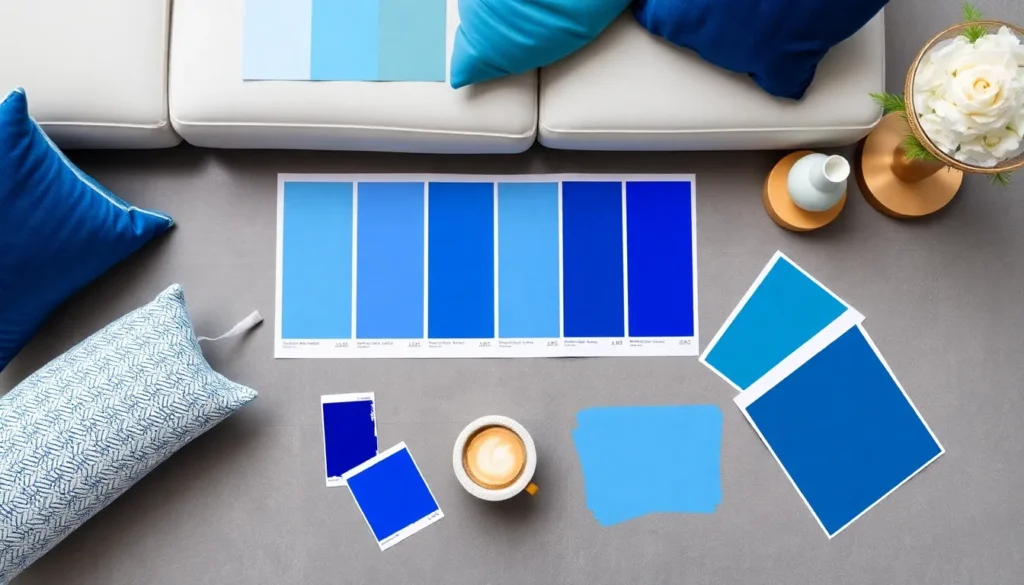
Shades of blue manifest in various forms, each with distinct characteristics and applications. Understanding these shades enhances design aesthetics and emotional resonance.
Light Blue
Light blue radiates tranquility and calmness. Often associated with serenity, it brings a fresh and airy feeling to spaces. In design settings, light blue complements white and soft gray well. It’s popular in nurseries and bedrooms, creating peaceful retreats. Paints like powder blue and baby blue exemplify this hue’s soothing qualities. Designers frequently use light blue to evoke a sense of spaciousness, making environments feel more open and inviting.
Dark Blue
Dark blue imparts depth and sophistication, frequently linked with professionalism and stability. Navy blue serves as a staple in corporate environments, symbolizing authority and trust. Its rich tone works well in formal attire and home decor, providing a classic backdrop. Pairing dark blue with gold or silver accents adds a touch of elegance. Shades like midnight blue and indigo add mystique and drama, making them ideal for accent walls or focal points. The versatility of dark blue makes it suitable for various design elements, from office spaces to upscale dining areas.
Bright Blue
Bright blue captures attention and promotes energy. This vivid shade often signifies creativity and excitement. In branding, brands frequently use it to convey trust and enthusiasm. Aqua and cobalt blue exemplify this dynamic hue, adding vibrancy to any palette. Bright blue pairs well with colors like yellow and orange, enhancing visual interest. Utilizing bright blue in graphic design or fashion can create striking elements that stand out. Its boldness brings a lively flair to both interiors and outdoor settings, making it a favorite choice among designers.
Color Psychology of Blue
Blue significantly influences emotions and perceptions. Different shades evoke distinct feelings, impacting how people experience their environments.
Emotional Effects
Light shades of blue often evoke feelings of tranquility. They create serene atmospheres, which make them popular choices for bedrooms and calming spaces. Meanwhile, darker shades, such as navy, promote feelings of professionalism and stability. These shades work well in corporate settings, instilling confidence in clients and employees. Bright blue inspires energy and optimism, frequently used in marketing campaigns to grab attention and create a sense of enthusiasm. Each variation contributes uniquely, shaping personal and professional interactions.
Symbolism of Blue
Blue carries deep cultural and psychological symbolism. Many societies view blue as a color of trust and loyalty, which explains its popularity in branding and corporate identities. Dark blue is often associated with authority and reliability, making it a common choice for uniforms and official attire. Cerulean represents openness and freedom, appealing to those seeking adventure. Turquoise embodies creativity and freshness, linking it to tropical vibes and relaxation. With such a rich symbolic palette, blue’s applications span diverse contexts, influencing choices in design and branding.
Uses of Blue in Design
Blue serves multiple purposes in design, influencing emotions and perceptions. Its diverse shades impact various fields, enhancing aesthetics and communication.
Interior Design
In interior design, light blue creates a calming atmosphere. This soft shade is common in bedrooms and nurseries, promoting relaxation. Medium blues, like cerulean, invite openness, making spaces feel larger. For sophistication, deep navy adds elegance, often found in corporate offices. Textures in dark blue can enhance a room’s richness. Turquoise infuses a refreshing coastal vibe, making it ideal for bathrooms and breezy coastal homes. Overall, blue shades help establish mood and style, making them vital in creating harmonious living environments.
Graphic Design
Graphic design frequently utilizes blue to promote trust and reliability. Bright blue attracts attention, effectively engaging viewers in marketing materials. Medium shades like steel blue add modernity to branding efforts, catering to youthful audiences. Corporations lean toward navy for professionalism in logos and websites. Each shade holds distinct emotional connotations, impacting how consumers perceive brands. Graphic designers incorporate blue to influence user experience, ensuring visual appeal aligns with intended messaging. By understanding these effects, designers foster meaningful connections through their work.
Understanding the shades of blue opens up a world of possibilities in design and aesthetics. Each hue carries its own emotional weight and significance that can transform any space or project. Whether it’s the calming effect of light blue or the professional allure of deep navy, these colors can significantly influence moods and perceptions.
By utilizing a shades of blue color chart, designers can make informed choices that resonate with their intended audience. This versatility makes blue a powerful ally in various fields from interior design to branding. Embracing this knowledge allows for more impactful and meaningful design decisions that truly reflect the desired atmosphere and message.