Garden Grove homeowners know the drill: a sluggish drain turns into a standing pool of greasy water, or worse, a backed-up toilet on a Sunday night. Whether it’s tree roots infiltrating your sewer line or a slow kitchen sink caused by years of grease buildup, drain problems don’t wait for convenient timing. This guide walks through the common culprits, proven DIY methods, and when it’s time to call in the pros, plus what to expect when you do.
Table of Contents
ToggleKey Takeaways
- Tree root intrusion is the most common drain cleaning problem in Garden Grove, especially in homes with mature trees near clay or older Orangeburg sewer lines.
- DIY drain cleaning methods like plungers and snakes work for 70% of clogs, but avoiding chemical drain cleaners prevents pipe damage and ensures safety if professional help is needed.
- Multiple fixtures backing up simultaneously signals a main sewer line blockage that requires professional equipment such as powered augers or hydro-jetting.
- Preventative maintenance including mesh drain screens, regular hot water flushes, and annual enzyme-based cleaners can prevent most minor drain issues from escalating.
- Choose a licensed drain cleaning company with camera inspection capability, transparent pricing, and guarantees; Garden Grove services typically cost $150–$600 for basic work due to California labor requirements.
- Recurring clogs in the same location warrant a professional sewer camera inspection to identify structural problems like root intrusion or bellied pipes.
Common Drain Problems Garden Grove Homeowners Face
Garden Grove’s mix of older housing stock and newer developments means drain issues vary widely. Here’s what shows up most often:
Tree root intrusion is the big one. Mature trees, especially the ficus, magnolia, and eucalyptus common in Southern California yards, send roots hunting for water. Clay or Orangeburg sewer lines installed before the 1980s crack over time, and roots exploit every gap. You’ll notice slow drains throughout the house, gurgling toilets, or sewage odors in the yard.
Grease and soap buildup clogs kitchen sinks and shower drains. Even though what the garbage disposal manufacturers imply, fats don’t magically disappear. They cool, coat pipe walls, and trap food particles. In bathrooms, bar soap combines with hard water minerals and hair to form a waxy sludge.
Foreign objects are surprisingly common, kids flushing toys, sanitary products that don’t belong in toilets, and “flushable” wipes that absolutely aren’t. These create sudden, complete blockages rather than gradual slowdowns.
Bellied or sagging sewer lines happen when soil settles unevenly. A low spot in the pipe traps solids and paper, building up until flow stops. Homes near the Garden Grove Strawberry Festival grounds, built on former agricultural land, sometimes deal with this due to soil compaction changes.
Hard water scale gradually narrows galvanized steel supply pipes (common in pre-1970s construction). While not technically a drain issue, it reduces pressure and can make slow drains feel worse than they are.
DIY Drain Cleaning Methods That Actually Work
Start with the least invasive approach and escalate as needed.
Plunger technique matters. For sinks, plug the overflow hole with a wet rag, otherwise you’re just pushing air in circles. Use 10-15 vigorous plunges with a good seal. For toilets, use a flange plunger (the one with an extended rubber cup), not a sink plunger. Add enough water to cover the plunger cup, then use forceful, rhythmic thrusts.
Drain snakes (augers) handle clogs 15-25 feet down. A 25-foot manual closet auger ($15-30) works for most toilet clogs. For sink and tub drains, a flexible plastic snake with barbed edges grabs hair effectively. Feed it slowly, rotate when you hit resistance, then pull back. Expect to bring up disgusting clumps, that’s success.
Avoid chemical drain cleaners (Drano, Liquid-Plumbing) for recurring problems. They generate heat that can soften PVC joints, and they create a caustic soup that’s dangerous if you later need to snake the line or call a plumber. If you must use them, follow directions exactly and never mix products.
Hot water flushes work for grease buildup in kitchen drains. Boil a full kettle and pour it down the drain in stages, waiting 10-15 seconds between pours. This works best as maintenance, not for complete blockages. Don’t use boiling water on PVC drains connected directly under the sink, the heat can loosen compression fittings. Following the techniques outlined in basic plumbing fixes helps prevent most minor clogs from becoming major headaches.
Natural Cleaning Solutions and Preventative Maintenance
Baking soda and vinegar creates a satisfying fizz but limited results. Pour ½ cup baking soda down the drain, follow with 1 cup white vinegar, wait 30 minutes, then flush with hot water. This works for minor soap scum and odors, not solid blockages. The chemical reaction is weak compared to enzymatic or mechanical methods.
Enzyme-based cleaners (like Bio-Clean or Green Gobbler) use bacteria to digest organic matter. Pour the recommended amount (usually 2-4 oz) down the drain before bed, let it sit 6-8 hours, then flush. These work slowly, plan on weekly applications for a month to clear gradual buildup. They’re safe for septic systems and won’t damage pipes.
Preventative habits make the biggest difference:
- Install mesh drain screens in all sinks and tubs. Empty them weekly.
- Scrape plates into the trash before rinsing. Garbage disposals are not trash cans.
- Run cold water for 30 seconds after using the disposal. Hot water melts grease, which then resolves farther down the pipe.
- Monthly hot water flush: Run the hottest tap water for 5 minutes to clear residual soap and grease.
- Pour a cup of ice and a cup of rock salt into the disposal monthly, run with cold water. This scours buildup from the grinding chamber.
For homes on septic systems, annual pumping (typically every 3-5 years depending on household size) prevents drain field failure and backups.
When to Call a Professional Drain Cleaning Service in Garden Grove
Some situations require equipment and expertise beyond DIY scope.
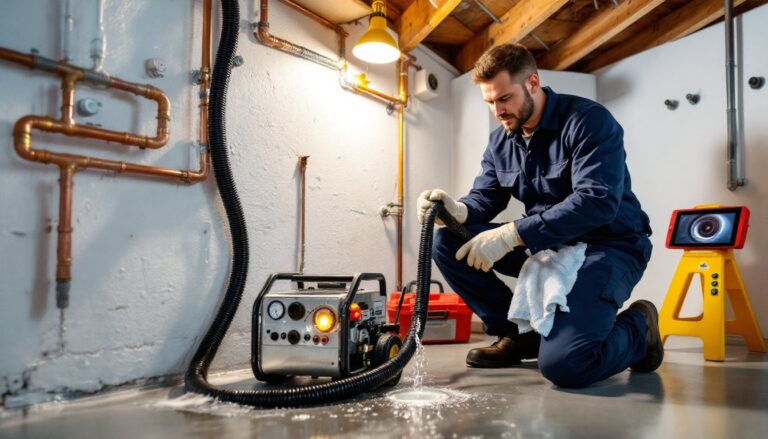
Multiple fixtures backing up simultaneously signals a main sewer line blockage. If flushing the toilet causes water to rise in the shower drain, or the washing machine backup floods the laundry sink, the clog is downstream of all fixtures. This typically requires a powered drain auger (snake machine) with 75-100 feet of cable, or hydro-jetting.
Recurring clogs in the same location after you’ve snaked it twice suggest a structural problem, root intrusion, bellied pipe, or deteriorated line. A plumber can run a sewer camera inspection ($150-300 as a standalone service, often free if you proceed with repairs). The camera identifies exactly where and what the problem is, eliminating guesswork.
Sewage backing up into the house is an emergency. Stop using all water, and call a 24-hour plumbing service immediately. Sewage contains harmful bacteria (E. coli, hepatitis A, salmonella) and can damage flooring and drywall quickly. This isn’t a DIY situation.
Persistent slow drains even though your efforts might mean venting issues. Plumbing vents equalize pressure, if they’re blocked (by bird nests or debris), drains gurgle and empty slowly. Diagnosing vent problems requires understanding the Uniform Plumbing Code (UPC) and sometimes roof access.
Chemical drain cleaner didn’t work. If you’ve already poured caustic chemicals down the drain, warn the plumber before they arrive. They’ll need gloves and eye protection before snaking, since the chemicals can splash back. Honesty here prevents injuries.
Tree root removal requires specialized cutting heads on a powered auger, sometimes followed by hydro-jetting to clear remaining debris. Roots grow back, so many pros recommend annual or bi-annual maintenance snaking for homes with mature trees near sewer lines.
How to Choose the Right Drain Cleaning Company in Your Area
Garden Grove has dozens of plumbing companies. Here’s how to separate the competent from the cowboys.
Check licensing and insurance. California requires a C-36 plumbing contractor license for any work over $500. Verify the license number at CSLB.ca.gov. Confirm they carry general liability insurance and workers’ compensation, you’re liable if an uninsured worker gets hurt on your property.
Look for camera inspection capability. Companies that offer video inspection have invested in diagnostic equipment, which usually indicates a more professional operation. Camera inspections prevent unnecessary digging and give you a record of the problem.
Ask about methods. Hydro-jetting (high-pressure water, 3,000-4,000 PSI) is ideal for grease, scale, and minor roots. Cable snaking works for most clogs but may leave residue. Companies using both tools can match the method to the problem. Comparing reviews on platforms tracking top-rated local professionals helps identify experienced technicians in the Garden Grove area.
Get detailed estimates. Reputable companies provide written quotes listing the scope of work, equipment used, and guarantees. Watch for “diagnosis fees” that disappear if you hire them, that’s fine. Avoid companies that quote prices over the phone without seeing the problem.
Check reviews for responsiveness and cleanup. Good drain companies protect your floors with drop cloths, clean up afterward, and return calls promptly. Bad ones leave a mess and ghost you if problems recur.
Ask about guarantees. Many pros offer 30-90 day warranties on drain cleaning. If the same clog returns during that window, they’ll re-clear it free. This only applies to the same blockage, not new issues.
Cost of Drain Cleaning Services in Garden Grove
Pricing varies based on problem complexity and time of service.
Basic drain snaking for a single fixture (sink, tub, toilet) typically runs $150-$300 during business hours. This covers the service call and clearing a straightforward clog within 25 feet of the access point.
Main sewer line cleaning costs $300-$600 for standard cable snaking, or $400-$900 for hydro-jetting. Access matters, if the plumber can reach the cleanout easily, it’s cheaper than going through a roof vent or pulling a toilet.
Emergency and after-hours service adds 50-100% to base prices. A Sunday evening main line backup might run $600-$1,200. Some companies waive the emergency fee if you schedule follow-up work.
Camera inspections as standalone services cost $150-$350 but are often included free or discounted when bundled with cleaning. The video recording is yours to keep, useful if you need multiple bids for repair work.
Root removal with specialized cutting equipment runs $400-$800 for the initial clearing, depending on severity and line length. Annual maintenance snaking to keep roots at bay costs less, around $200-$350.
According to national averages tracked by cost estimator tools, Garden Grove prices run slightly above the national median due to California labor costs and licensing requirements, but below Los Angeles and Orange County coastal cities.
Factors affecting cost:
- Accessibility: Cleanouts in garages or along the property line are cheaper to access than rooftop vents or crawl spaces.
- Pipe material: Cast iron and clay are slower to clean than PVC.
- Time of day/week: Nights, weekends, and holidays cost more.
- Severity: A simple hair clog takes 20 minutes: tree roots infiltrating 40 feet of sewer line can take 2-3 hours.
Get three quotes for major work. For simple clogs, choose a licensed company with good reviews and availability that day, waiting often makes problems worse.
Conclusion
Most drain problems in Garden Grove respond to patient DIY effort, a good plunger and snake handle 70% of clogs. When they don’t, licensed professionals with camera equipment and hydro-jetters can diagnose and clear what you can’t. The key is knowing which you’re dealing with before a minor slowdown becomes a sewage backup.