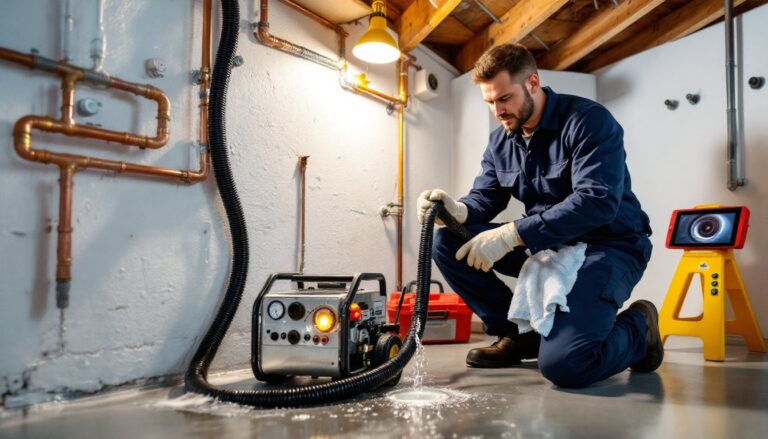
Fort Worth homeowners know the frustration: water pooling in the sink, showers draining slower than molasses, or worse, a backed-up toilet. Whether it’s the hard water buildup common in Tarrant County or years of hair and soap scum accumulation, clogged drains are one of the most frequent plumbing headaches in North Texas homes. This guide walks through the most effective DIY drain cleaning methods, explains when a problem requires a professional drain cleaning service, and shares maintenance strategies to keep your pipes flowing freely year-round.
Table of Contents
ToggleKey Takeaways
- Fort Worth’s hard water and mineral deposits, combined with hair and grease buildup, are the leading causes of clogged drains that require drain cleaning solutions.
- DIY methods like baking soda and vinegar work for minor clogs, but mechanical tools like drain snakes and professional hydro-jetting are necessary for stubborn blockages.
- Call a professional drain cleaning service immediately if multiple drains back up, sewage appears, or you notice foul odors, as these signal serious sewer line problems.
- Licensed Fort Worth plumbers with hydro-jetting equipment and camera inspection tools can identify root intrusion and pipe damage that DIY methods cannot fix.
- Prevent future clogs by avoiding grease in kitchen drains, installing hair screens in bathrooms, and scheduling professional camera inspections every 3–5 years for older homes with mature trees nearby.
Common Drain Problems Fort Worth Homeowners Face
Fort Worth’s municipal water is moderately hard, averaging around 120-150 mg/L of calcium carbonate. Over time, this mineral-rich water leaves behind scale deposits inside galvanized steel and copper pipes, narrowing the flow path and creating catch points for debris.
Hair and soap scum buildup dominates bathroom drains. A single shower can shed 50-100 strands of hair, and when combined with soap residue (especially bar soap), it forms a sticky mat that traps toothpaste, shaving cream, and other gunk. Kitchen sinks face a different enemy: grease and food particles. Even with a garbage disposal, fats solidify as they cool in the drain line, coating the pipe walls and gradually constricting flow.
Tree root intrusion is another Fort Worth-specific issue. Mature live oaks and pecans common in older neighborhoods send hair-thin roots into sewer lines through tiny cracks or joints, seeking moisture. Once inside, roots expand and create total blockages. Homes built before 1980 with clay or Orangeburg pipe are especially vulnerable.
Finally, improper items flushed or rinsed cause preventable clogs. “Flushable” wipes don’t break down like toilet paper, baby wipes are even worse, and cooking grease should never go down any drain, yet these remain the top service call culprits for Fort Worth plumbers.
DIY Drain Cleaning Methods That Actually Work
Before calling for help, homeowners can clear many common clogs with basic tools and household materials. Success depends on matching the method to the blockage type and drain location.
Natural Solutions: Baking Soda, Vinegar, and Hot Water
The classic baking soda and vinegar flush works for light organic buildup, soap scum, minor grease, and early-stage hair clogs. It won’t touch hard blockages or mineral scale.
Procedure:
- Remove standing water from the sink or tub.
- Pour ½ cup baking soda directly into the drain opening.
- Follow immediately with ½ cup white vinegar. The reaction will foam and fizz.
- Cover the drain with a wet rag or stopper to direct the reaction downward.
- Wait 15-30 minutes, then flush with one gallon of boiling water (use caution with PVC pipes, water just below boiling is safer).
This method refreshes drains between deeper cleanings but won’t break through solid clogs. For tougher jobs, enzymatic drain cleaners (available at hardware stores) use bacteria cultures to digest organic matter over 8-12 hours. They’re slower than chemical cleaners but won’t damage pipes or septic systems.
Safety note: Never mix commercial drain cleaners with vinegar or other acids. The chemical reaction can produce toxic fumes or explosive heat.
Manual Tools: Plungers, Drain Snakes, and Augers
Mechanical clearing is more effective for stubborn clogs. Start with the right plunger: cup plungers work for sinks and tubs: flange plungers (with an extended rubber sleeve) seal properly on toilet bowls. According to guides on plumbing fixes, creating a tight seal and using short, forceful strokes generates the pressure needed to dislodge blockages.
For deeper clogs, a drain snake (also called a hand auger) is essential DIY equipment. Standard models extend 15-25 feet and cost $15-$40. Here’s how to use one:
- Wear rubber gloves, you’ll be handling whatever comes out.
- Feed the cable into the drain slowly, cranking the handle clockwise.
- When you hit resistance, push and pull while rotating to break through or hook the clog.
- Retract the cable slowly, clearing debris as it emerges.
- Flush the drain with hot water to clear remaining material.
For toilet clogs beyond a plunger’s reach, a closet auger (a specialized 3-6 foot tool with a protective sleeve) prevents porcelain scratches. Kitchen sink clogs often require accessing the P-trap, the U-shaped pipe under the sink. Place a bucket underneath, loosen the slip nuts with channel-lock pliers, and remove the trap to clear it manually. It’s messy but often faster than snaking from above.
Power augers (electric or drill-powered) cut through roots and hard blockages but require experience. Improper use can puncture drain lines, especially older cast iron or ABS plastic. If a hand auger won’t clear the clog after three attempts, it’s time to call a pro.
When to Call a Professional Drain Cleaning Service in Fort Worth
Some clogs signal bigger problems that DIY methods can’t solve, and attempting them risks serious damage or health hazards.
Call immediately if:
- Multiple drains back up simultaneously. This indicates a main sewer line blockage, possibly from roots or a collapsed pipe. Trying to clear this from individual drains won’t work and may push sewage into your home.
- Sewage backs up into tubs or showers. This is a red-flag emergency requiring professional hydro-jetting or sewer line inspection with a camera scope.
- Persistent slow drains even though clearing attempts. Chronic issues often stem from pipe scale, improper venting, or slope problems in the drain line, structural issues a snake can’t fix.
- Foul odors from drains. Beyond normal drain smell, rotten egg or sewage odors may indicate a broken vent pipe, dry P-trap, or sewer gas leak.
- Water damage or leaks appear after snaking. You may have punctured a corroded pipe. Shut off water and call a licensed plumber.
Fort Worth requires licensed plumbers for any work involving water supply lines or modifications to drain-waste-vent (DWV) systems. Simple drain clearing doesn’t require a permit, but if inspection reveals pipe replacement or rerouting, permits and inspections follow IRC and local amendments.
Professional services use hydro-jetting (high-pressure water at 3,000-4,000 PSI) to scour pipe walls clean, far more effective than mechanical snaking for grease and scale. Video camera inspection pinpoints problems like root intrusion, bellied pipes, or offset joints without guesswork. Expect to pay $150-$300 for standard drain clearing in Fort Worth, $300-$600 for hydro-jetting, and $200-$400 for camera inspection, though prices fluctuate with market conditions and job complexity.
How to Choose the Right Fort Worth Drain Cleaning Company
Fort Worth has dozens of drain cleaning services, but quality and pricing vary widely. Homeowners should vet contractors before an emergency strikes.
Verify licensing and insurance. Texas requires plumbers to hold a license from the Texas State Board of Plumbing Examiners for any work beyond basic fixture replacement. Ask for the license number and verify it online. General liability insurance protects you if the plumber damages your property: workers’ compensation covers injuries on your property.
Check reviews and complaints. Services listed on top-rated Fort Worth platforms often carry verified customer feedback and ratings. Look for patterns: repeated complaints about pricing transparency, incomplete work, or damage claims are red flags. The Better Business Bureau (BBB) tracks complaint resolution rates.
Request detailed estimates. Reputable companies provide upfront pricing or clearly explain diagnostic fees that apply toward work. Be wary of vague “starting at” prices without scope details. Ask what’s included: does the quote cover cleanup, disposal, and post-job testing?
Ask about equipment and methods. Companies with hydro-jetting and camera inspection equipment can handle more issues in one visit. If they rely solely on mechanical snakes, they may not clear tough clogs or identify underlying problems.
Consider emergency availability. Sewer backups don’t wait for business hours. Companies offering 24/7 emergency service typically charge premium rates after hours (expect 1.5-2× standard pricing), but availability matters during a crisis.
Platforms like HomeAdvisor offer contractor matching and cost estimators specific to Fort Worth ZIP codes, helping homeowners compare options and budget realistically for both routine and emergency drain cleaning services.
Preventive Maintenance Tips to Keep Your Drains Clear
Most drain problems are preventable with consistent habits and minor quarterly maintenance.
In the kitchen:
- Never pour grease, oil, or fat down the drain. Let it cool, then scrape into a disposable container and trash it.
- Run cold water while using the garbage disposal and for 15 seconds afterward to flush particles through the trap.
- Use a sink strainer to catch food debris before it enters the drain.
In bathrooms:
- Install drain screens in showers and tubs to catch hair. Clean them weekly.
- Flush drains monthly with boiling water or the baking soda-vinegar treatment to prevent soap scum buildup.
- Avoid chemical drain cleaners as regular maintenance. They’re harsh on pipes (especially older galvanized steel) and create caustic residue in septic systems.
For main sewer lines:
- Schedule a camera inspection every 3-5 years if you have mature trees near the sewer line or live in a home built before 1990. Catching root intrusion early saves thousands in emergency repairs.
- Consider enzymatic treatments for septic systems. Monthly applications help break down organic matter and reduce sludge buildup.
- Know the location of your main cleanout, the access point for professional clearing. It’s typically a 3-4 inch white PVC cap in the yard or basement. Mark it clearly.
General practices:
- Don’t flush anything besides toilet paper and human waste. Even “flushable” wipes clog sewer lines and treatment plants.
- Educate everyone in the household about what belongs in drains. Most clogs come from accumulated small mistakes.
- Watch for early warning signs: slow drainage, gurgling sounds, or water backing up in nearby fixtures. Address minor issues before they become emergencies.
Regular maintenance takes minutes but prevents the time, cost, and mess of dealing with a major backup. Fort Worth’s hard water and clay soil conditions make consistent care especially important for long-term drain health.