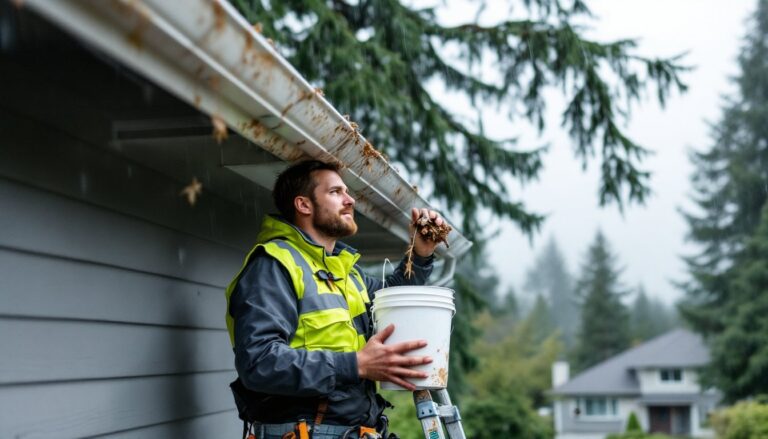
Gutters aren’t glamorous. They don’t make Pinterest boards or add to your curb appeal. But let a rainstorm hit with clogged gutters, and you’ll see why they’re one of the most important parts of your home’s defense system. Water damage from overflowing gutters can wreck foundations, rot fascia boards, flood basements, and even compromise structural integrity. The good news? Keeping them clear doesn’t require a contractor’s license, just a ladder, the right approach, and a decision about whether gutter guards make sense for your property.
Table of Contents
ToggleKey Takeaways
- Clogged gutters can cause serious damage including foundation settling, fascia rot, and basement flooding, making regular gutter cleaning essential for home protection.
- Gutter guards reduce cleaning frequency from twice yearly to once every few years but don’t eliminate maintenance entirely, requiring annual inspections.
- DIY gutter cleaning is cost-effective for accessible one-story homes with proper safety precautions, while professional installation is recommended for two-story properties or complex rooflines.
- Mesh and screen guards are the most practical options for homeowners; mesh handles fine debris better while screen styles are cheaper and easier to install.
- Professional gutter guard systems typically pay for themselves in 3–7 years compared to regular cleaning costs, offering better long-term value in areas with significant tree cover.
Why Gutter Maintenance Matters for Your Home
Gutters channel thousands of gallons of water away from your home every year. When they clog with leaves, shingle grit, and debris, that water has nowhere to go but over the edge, straight down your siding, into window wells, and against your foundation.
The damage compounds fast. Foundation settling from saturated soil can crack basement walls and create expensive structural repairs. Fascia and soffit rot from constant moisture exposure means replacing wood trim and possibly dealing with mold inside wall cavities. Ice dams form in winter when backed-up water refreezes, forcing moisture under shingles and into attic spaces.
Most building codes don’t specify gutter maintenance schedules, that’s on the homeowner. But ignoring them for a year or two can cost thousands in repairs. Homes surrounded by trees need cleaning at least twice annually (spring and fall). Properties with minimal tree cover might get by with annual service, but even pine needles and roof granules accumulate over time.
Regular inspections also catch problems early. Sagging sections indicate loose hangers or fascia damage. Visible rust or holes mean it’s time for repairs before small leaks become big problems. Water stains on siding below gutter lines are a red flag that something’s wrong, either the pitch is off, or clogs are forcing overflow.
How to Clean Your Gutters: A Step-by-Step DIY Guide
Gutter cleaning is straightforward but not risk-free. Falls from ladders send thousands of homeowners to the ER every year, so take the safety piece seriously.
Essential Tools and Safety Precautions
Before you climb, gather your gear:
- Extension ladder rated for your weight plus tools (Type I or Type IA for most adults)
- Ladder standoff or stabilizer to keep the ladder off gutters and provide clearance
- Work gloves (leather or heavy rubber, gutter sludge is nasty)
- Safety glasses to protect from debris and wasp nests
- Gutter scoop or garden trowel for removing packed debris
- 5-gallon bucket with a hook or bungee to hang from the ladder
- Garden hose with spray nozzle for flushing downspouts
- Drop cloths or tarps to catch debris if you’re working over landscaping
Safety first: Never lean or overreach from a ladder. Reposition it frequently, the extra trips up and down beat a trip to the hospital. If your roof is steeper than 6:12 pitch or higher than one story, consider hiring a pro. Wet leaves on a roof are slicker than ice.
Set the ladder on firm, level ground. If you’re on soft soil, use a scrap piece of plywood under the feet for stability. Have someone spot you if possible, especially if you’re new to ladder work.
Step-by-step process:
- Start near a downspout. Work away from it so you’re not dragging debris over already-clean sections.
- Scoop out debris by hand or with a gutter scoop. Drop it into your bucket, not onto the ground (unless you enjoy raking twice).
- Check for standing water. Gutters should slope about ¼ inch per 10 feet toward downspouts. Pooling water means the pitch is off or hangers have failed.
- Flush with a hose once debris is removed. Start away from downspouts and work toward them, checking for leaks at seams and end caps.
- Clear downspout clogs by running water from the top. If it doesn’t drain, try a plumber’s snake or disassemble the elbow at the bottom. For stubborn clogs, professional services can use pressure washers or augers.
- Inspect while you’re up there. Tighten loose screws on hangers, reseal leaking joints with gutter sealant, and check that downspout extensions direct water at least 6 feet from the foundation.
Plan on 2–4 hours for an average single-story home, longer if you’ve got a lot of trees or it’s been a while. Two-story homes or complex rooflines double that time, and the risk.
Understanding Gutter Guards: Types and Benefits
Gutter guards don’t eliminate maintenance, but they can stretch cleaning intervals from twice a year to once every few years. Whether that’s worth the investment depends on your tree situation, roof type, and tolerance for ladder work.
The core benefit is simple: keep large debris out while letting water through. That reduces clogs, extends gutter life by keeping standing water to a minimum, and cuts down on the critter condos that form in decomposing leaf piles.
Mesh, Screen, and Reverse Curve Options
There’s no one-size-fits-all guard. Each type has trade-offs:
Mesh guards use fine stainless steel or plastic mesh (usually 20–50 microns) to filter debris. They handle heavy rain well and block most leaves, but pine needles and shingle grit can still clog the mesh over time. They’re popular in regions with mixed tree types. Expect to brush off the surface annually.
Screen guards are perforated metal or plastic panels, typically with larger holes than mesh (around ⅛ to ¼ inch). They’re cheaper and easier to install but allow smaller debris through. Best for homes with large-leaf trees (oak, maple) rather than pines or aspens. Many DIY kits use this style because they slip under the first course of shingles and clip to the gutter edge, no screws required.
Reverse curve (surface tension) guards guide water over a curved nose piece and into a narrow slot, while debris supposedly slides off the edge. In practice, they work great in moderate climates but struggle with heavy downpours (water can overshoot) and require professional installation since they often attach to fascia or roof decking. They’re the most expensive option and not ideal for DIYers.
Foam and brush inserts sit inside the gutter. Foam blocks debris but can hold moisture and grow mold: brush inserts catch leaves but are tedious to clean. Neither is recommended for long-term use.
No guard is 100% maintenance-free. Homeowners still need to inspect annually and occasionally blow off or rinse accumulated fine debris. But that beats scooping rotted sludge by hand.
DIY Installation vs. Professional Services: What’s Right for You?
Many gutter guards are DIY-friendly, especially snap-on screen or mesh styles. If you’re comfortable on a ladder and your gutters are already in good shape, a weekend project can save hundreds in labor.
DIY makes sense when:
- Your roof is one story with accessible eaves
- Gutters are clean, level, and securely fastened
- You’re using snap-in or clip-on guards that don’t require fasteners into the roof
- You have basic tools (tin snips, measuring tape, ladder stabilizer)
Most DIY kits cost $1–$3 per linear foot for materials. Installation is straightforward: measure sections, cut to fit, and secure according to manufacturer instructions. Some systems slide under shingles: others clip to the gutter lip. Avoid products that require screwing into shingles or fascia unless you’re confident in your roof knowledge, improper fastening can void roofing warranties or create leak points.
Hire a pro when:
- Your roof is two stories or has a steep pitch (above 7:12)
- Gutters need repair, realignment, or replacement first
- You’re installing reverse-curve or under-shingle systems that attach to roof decking
- Local codes require permits for gutter work (rare, but some jurisdictions regulate anything touching the roofline)
- You just don’t want to deal with ladders, no shame in that
Professional installation runs $7–$25 per linear foot depending on guard type and regional labor rates. That includes assessment, minor gutter repairs, and often a warranty on both product and installation. For custom-fit, high-end systems, the precision and liability coverage can be worth it. Many installers also offer maintenance packages, which makes sense if you’re hiring out the work anyway.
Cost Comparison and Long-Term Value of Gutter Guards
Upfront costs vary widely. A typical 150-foot gutter system (average for a 1,500-square-foot ranch) breaks down like this:
- DIY screen guards: $150–$450 in materials
- DIY mesh guards: $300–$600 in materials
- Professional screen installation: $1,000–$2,000
- Professional mesh or micro-mesh: $1,500–$3,500
- Professional reverse-curve systems: $2,500–$5,000+
Compare that to professional gutter cleaning, which costs $100–$250 per visit depending on home size and regional rates. If you’re paying for twice-yearly cleanings, guards can pay for themselves in 3–7 years, assuming they actually reduce cleaning frequency.
The math tilts in favor of guards when:
- You have significant tree cover (especially pine, oak, or maple)
- Your home is two stories or has difficult roof access
- You’d otherwise hire out cleaning multiple times per year
- You plan to stay in the home long enough to recoup the investment
Guards are a harder sell if you’re in an open area with few trees, comfortable doing your own maintenance, or planning to sell within a few years. Research on whether gutter guards add home value suggests they’re seen as a nice-to-have rather than a major selling point, buyers appreciate low-maintenance features, but it rarely moves the needle on appraisal.
Don’t forget the hidden costs of not maintaining gutters. Foundation repairs start around $3,000 for minor cracks and can hit $15,000+ for underpinning or drainage correction. Fascia board replacement runs $6–$20 per linear foot plus labor. Basement waterproofing averages $3,000–$7,000. Compared to those figures, even a premium gutter guard system is cheap insurance.
One final consideration: longevity. Quality stainless steel mesh guards can last 20+ years with minimal maintenance. Cheaper plastic screens may crack or warp in 5–10 years, especially in freeze-thaw climates. Check warranties, 20-year transferable warranties signal a manufacturer stands behind their product. Anything less than 10 years should raise questions.
For most homeowners with mature trees, a mid-grade mesh or screen guard installed DIY or by a local contractor offers the best balance of cost, performance, and reduced ladder time. Your knees and your foundation will both thank you.