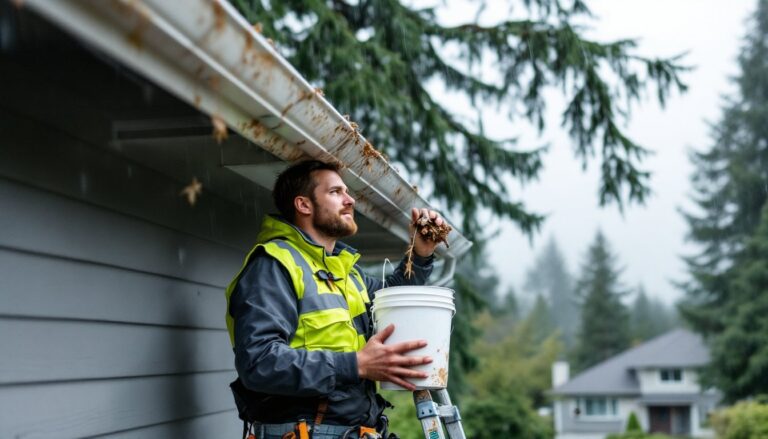
San Jose’s Mediterranean climate isn’t hard on gutters year-round, but when the rains hit between November and March, clogged channels can turn minor drainage issues into foundation problems, wood rot, and landscape erosion. Most homeowners notice their gutters only when water’s pouring over the edge or pooling against the house. By then, damage has often started. Regular gutter maintenance isn’t glamorous work, but it’s one of the simplest ways to protect a home’s structure and avoid costly repairs down the line.
Table of Contents
ToggleKey Takeaways
- Gutter cleaning in San Jose is critical for protecting foundations and preventing water damage, as the region’s clay-heavy soil drains poorly and seasonal rains (November–March) can cause cracks, wood rot, and basement seepage.
- Most San Jose homes need gutter cleaning twice yearly—once in late fall before the rainy season and once in early spring after rains taper off, with more frequent cleanings needed for homes near oak, sycamore, or redwood trees.
- DIY gutter cleaning requires proper safety precautions including a Type I ladder with stabilizer, rubber gloves, safety glasses, and a partner; single-story homes with roof pitch 4/12 or less are manageable, but two-story homes warrant hiring professionals.
- Professional gutter cleaning services in San Jose typically cost $120–$250 for single-story homes and $200–$400 for two-story homes, with reputable companies verifying licensing, providing written condition reports, and avoiding aggressive upsells.
- Prevent future gutter problems by installing micro-mesh gutter guards, trimming trees 6–8 feet from the roofline, extending downspouts at least 5 feet from the foundation, and inspecting gutters after major storms to catch issues early.
Why Gutter Cleaning Is Critical for San Jose Homes
San Jose sits in a valley with clay-heavy soil that drains poorly. When gutters overflow, water doesn’t just disappear, it saturates the ground around the foundation, increasing hydrostatic pressure and creating the conditions for cracks, settling, and basement seepage (even in homes with crawl spaces).
Clogged gutters also contribute to fascia and soffit rot. Water that backs up under shingles or behind gutter faces sits against wood trim, which isn’t designed for prolonged moisture exposure. Over time, this leads to mold, wood decay, and expensive carpentry repairs.
Another concern specific to the Bay Area: wildfire debris. Even if a home isn’t in a high-risk zone, wind-blown ash and dry leaves can accumulate quickly during fire season. When the rains arrive, this debris forms a sludge that’s harder to clear than standard leaf matter and can corrode aluminum gutters if left in place.
Finally, standing water in gutters becomes a mosquito breeding ground. Santa Clara County has active mosquito abatement programs due to West Nile virus risk, and stagnant gutters are a common culprit.
When to Clean Your Gutters in San Jose’s Climate
San Jose’s dry summers and wet winters create a predictable maintenance calendar. Most homes need cleaning twice per year: once in late fall (October or November) before the rainy season, and once in early spring (March or April) after the rains taper off.
Homes near oak, sycamore, or redwood trees may need quarterly cleaning. Oaks drop leaves and acorns in fall,花粉 catkins in spring, and small twigs year-round. Sycamores shed bark and seed balls that decompose into a fibrous mat. Redwood needles are small and slip through gutter guards, clogging downspouts from the inside.
After a heavy storm, especially if winds exceed 25 mph, do a visual check. Look for sagging sections, overflow marks on siding, or plant growth in the gutter channel. Even a single storm can deposit enough material to block a downspout elbow.
Fire season (typically June through October) is also a trigger. If there’s been a nearby fire or heavy smoke, inspect gutters for ash accumulation. Ash mixed with the first rain creates a cement-like residue that’s difficult to remove once it dries.
DIY Gutter Cleaning: Tools and Safety Tips
Gutter cleaning isn’t complicated, but it does involve ladders and roof edges, two of the top causes of DIY injuries. Before starting, assess the roof pitch and height. Single-story homes with a 4/12 pitch or less are manageable for most homeowners. Two-story homes or roofs steeper than 6/12 warrant hiring a professional, especially if the homeowner isn’t comfortable on a ladder for extended periods.
Always use a Type I or Type IA ladder (rated for 250–300 lbs) with a standoff stabilizer to keep the ladder off the gutter face. Leaning a ladder directly against gutters can dent or detach them. Work with a partner who can stabilize the base and hand up tools.
Wear heavy-duty rubber gloves, not cotton or leather, which soak through. Gutter sludge often contains decomposed organic matter, bird droppings, and sharp debris. Safety glasses are non-negotiable: a twig or acorn falling from a downspout can cause an eye injury.
Never reach more than an arm’s length to either side. Repositioning the ladder takes time, but overreaching causes falls. If the roof edge is accessible and the pitch allows, consider standing on the roof instead of the ladder for better stability. Use a roof harness or work only on sections with secure footing.
Essential Equipment for the Job
Materials and tools:
- Ladder (extension ladder for two-story homes, step ladder for single-story)
- Gutter scoop or plastic trowel (metal tools can scratch aluminum gutters)
- 5-gallon bucket with an S-hook to hang from the ladder
- Garden hose with a spray nozzle (for flushing downspouts)
- Plumber’s snake or wire coat hanger (for stubborn downspout clogs)
- Work gloves, safety glasses, closed-toe shoes
- Drop cloths or tarps (to catch debris if working near flower beds or hardscaping)
Start at a downspout and work away from it, scooping debris into the bucket. Once a section is clear, flush it with the hose to check for proper flow. If water pools or drains slowly, there’s likely a clog in the downspout or a sag in the gutter run.
To clear a downspout, remove the bottom elbow and run water from the top. If that doesn’t work, disassemble the downspout at the seams (most are held with sheet metal screws) and clear the blockage manually. Don’t force a hose attachment into a clogged downspout, it can create pressure that separates joints or pushes the clog deeper.
After cleaning, check for loose hangers, separated seams, or rust spots. Aluminum gutters can last 20+ years, but hangers (the brackets that attach the gutter to the fascia) may pull loose over time, especially if they’re spaced more than 24 inches apart. Tighten or replace loose hangers before the next rain.
How to Choose a Professional Gutter Cleaning Service in San Jose
For homeowners who’d rather not climb a ladder, plenty of local services handle gutter cleaning. The challenge is sorting the pros from the fly-by-night operators.
Verify licensing and insurance. In California, gutter cleaning doesn’t require a contractor’s license unless it involves repairs, but any legitimate business should carry general liability insurance and workers’ compensation coverage. Ask for proof. If a worker falls off your roof and the company isn’t insured, the homeowner can be held liable.
Check references and online reviews. Sites like Angi compile local ratings and verified customer feedback, which helps identify companies with consistent service quality. Look for patterns in reviews, mentions of punctuality, thoroughness, and cleanup.
Ask what’s included in the service. Some companies only scoop debris: others flush downspouts, check hangers, and provide a written condition report. The latter is worth paying extra for, especially if the home has older gutters.
Avoid companies that quote sight unseen. Gutter cleaning cost depends on linear footage, roof height, pitch, and debris load. A reputable company will visit the property or request detailed photos before giving a firm price.
Be wary of upselling. Some services push gutter guards or full replacements after a single visit. Guards can be useful (more on that below), but a hard sell immediately after cleaning is a red flag. Get a second opinion before committing to major add-ons.
Cost of Gutter Cleaning Services in San Jose
As of 2026, typical gutter cleaning in San Jose runs $120–$250 for a single-story home and $200–$400 for a two-story home, depending on gutter length and accessibility. Homes with steep roofs, multi-level sections, or heavy tree coverage can push costs higher.
Most companies charge by linear foot ($0.80–$1.50/ft) or by the job. Per-foot pricing is more transparent and scales with the actual work involved. Flat-rate pricing can be a good deal for straightforward jobs but may include hidden fees for extras like downspout flushing or minor repairs.
Some services offer annual or bi-annual contracts at a discount, typically 10–15% off the per-visit rate. This makes sense for homes that need regular cleaning and removes the hassle of scheduling.
Platforms like HomeAdvisor and ImproveNet provide cost calculators and contractor matching tools, which can help homeowners compare quotes and understand local market rates. Keep in mind that the lowest bid isn’t always the best value. A company that rushes the job or skips downspout flushing will cost more in the long run if problems aren’t caught early.
Additional services, gutter guard installation, minor fascia repair, or moss removal, are usually quoted separately. Gutter guards range from $5–$15 per linear foot installed, depending on the type (mesh, foam, or reverse-curve).
Preventing Future Gutter Problems
Gutter guards are the most common preventive measure. They reduce (but don’t eliminate) the need for cleaning by blocking large debris. Micro-mesh guards are the most effective for San Jose conditions, they keep out leaves, needles, and seed pods while allowing water through. Avoid foam inserts, which degrade in UV light and can trap moisture against the gutter.
Trim trees back so branches are at least 6–8 feet from the roofline. This reduces the volume of debris and limits access for rodents and birds, which sometimes nest in gutters.
Check gutter pitch during cleaning. Gutters should slope 1/4 inch per 10 feet toward the downspout. Over time, hangers loosen or fascia boards sag, creating low spots where water pools. Adjusting the pitch is a straightforward fix, re-hang the affected section using new brackets spaced 18–24 inches apart.
Downspout extensions are another often-overlooked upgrade. Standard downspouts dump water 1–2 feet from the foundation, which isn’t far enough on clay soil. Extend them at least 5 feet away, or connect them to underground drainpipes that outlet to the street or a dry well. This is especially important for homes on sloped lots or near retaining walls.
For homeowners managing multiple maintenance tasks, pairing gutter cleaning with other routine services can simplify scheduling, many house cleaning services in San Jose offer exterior maintenance bundles or can recommend trusted contractors.
Finally, inspect gutters after every major storm. A quick walk around the house takes five minutes and can catch problems before they escalate. Look for overflow stains, sagging sections, or standing water. Early intervention, tightening a hanger or clearing a single clog, prevents the need for full-scale repairs later.